Morocco Discovery: 9 Days Tour from Casablanca to Imperial Cities & Sahara Desert
Duration
7 DAYS
Start in
Casablanca
End in
Marrakesh
Pickup
Airport or accommodation
OVERVIEW OF TOUR 9 DAYS MOROCCO DISCOVERY
Experience the magic of Morocco on this 9-day journey through vibrant cities, ancient ruins, and breathtaking natural landscapes. Beginning in Casablanca, you’ll explore iconic landmarks before heading to Morocco’s political capital, Rabat.
Venture north to the enchanting blue city of Chefchaouen, then explore the rich history of Meknes, Volubilis, and the spiritual city of Fez. Journey through the Middle and High Atlas Mountains, visiting cedar forests, oases, and desert villages, culminating in a memorable overnight camel trek in the Sahara.
Continue through the dramatic Dades Valley, Todra Gorges, and the rose-scented valleys of Ouarzazate before arriving in Marrakech. Discover its bustling medina, historical landmarks, and serene gardens before departing home. This tour perfectly blends Morocco’s history, culture, and natural beauty.
Tour Highlights
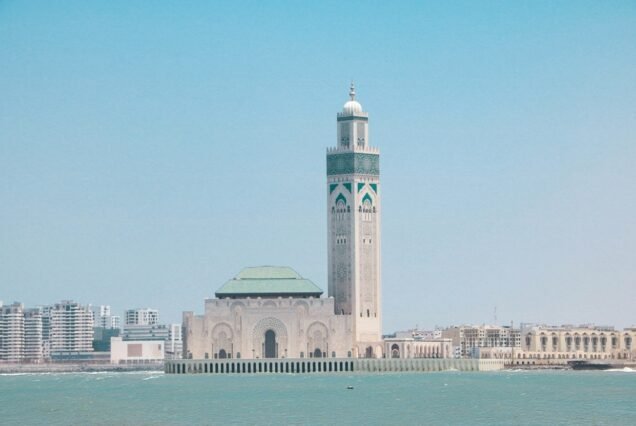
- Visit one of the world’s largest mosques Hassan II and admire its beautiful design by the ocean.
- Walk through charming blue streets, explore the Kasbah, and enjoy views from the old Spanish Mosque.
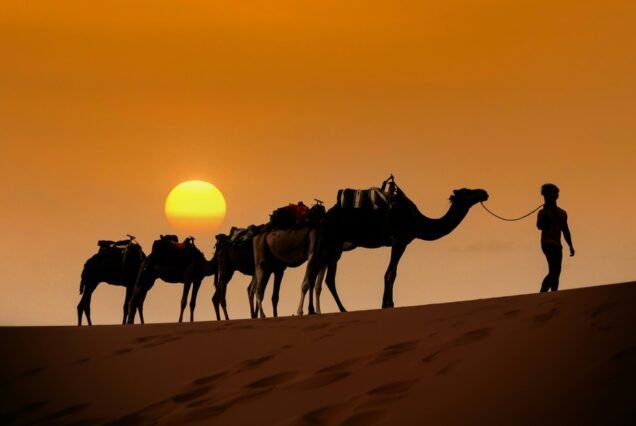
- Ride camels over golden sand dunes, watch the sunset, and spend a night in a traditional Berber camp.
- Explore the old medina, visit the world’s oldest university, and see traditional tanneries and Islamic architecture.
- Drive over the scenic Atlas Mountains, visit the famous Ait Benhaddou Kasbah, and see Ouarzazate, Morocco’s “Hollywood.”
Detailed Itinerary
Welcome to Morocco! Start your tour by exploring the main attraction of Casablanca, the Hassan II Mosque. The Hassan II Mosque is a stunning sight to behold, with its grand façade and towering 210-meter (690-foot) minaret, making it one of the most iconic landmarks in Morocco. Located in the heart of Casablanca, the mosque opened its doors in 1993 and features an exquisite combination of traditional Islamic architecture and modern Moroccan design. Inside, the mosque is an astonishingly beautiful space, with walls decorated with intricate mosaics and floors covered with stunning Persian carpets. The Hassan II Mosque has a capacity of 25,000 worshippers and is one of the few mosques in the world where non-Muslims are allowed to enter.
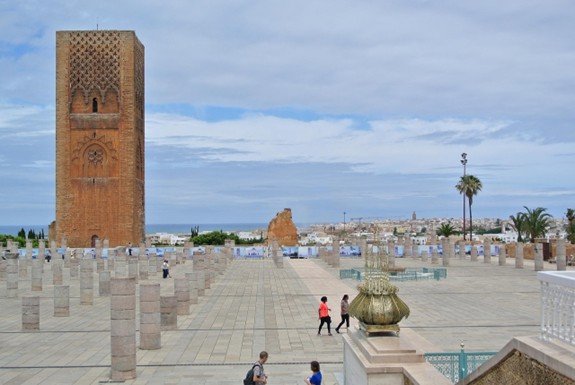
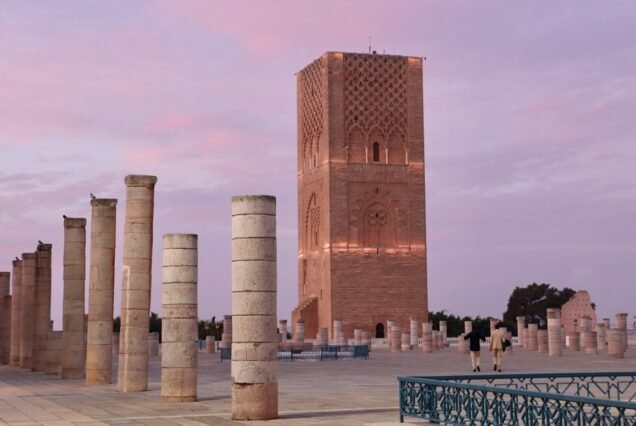
After the visit, travel to Rabat, the capital of Morocco, located on the Atlantic coast. Spend the afternoon exploring the Kasbah of the Udayas, which was built in the 12th century to overlook the Bou Regreg (Ribat) River. It served as a military base for the Almohad dynasty under Sultan Abdelmoumen and Yaakoub al Mansour. Continue to the Andalusian Gardens, built in the 20th century during the French occupation, offering a peaceful escape from the crowds. Finally, visit the Hassan Tower, an unfinished mosque dating back to the 12th century. Although never completed, the site still features around 200 columns and a red sandstone tower standing 44 meters (145 feet) high. End your day in Rabat.
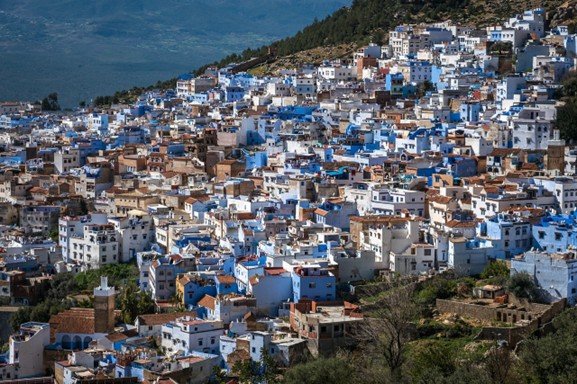
Travel north to the Blue City of Chefchaouen over the Rif Mountains. Upon arrival in the afternoon, you can begin discovering Chefchaouen. The historic medina of Chefchaouen, which has remained largely untouched since the 15th century, is famous for its blue-washed buildings and offers a relaxed atmosphere with local residents in the old quarter. Explore the city’s winding and narrow streets and alleyways that cling to the northern hillside of the mountains.
Visit Plaza Uta el-Hammam, the main square of Chefchaouen, named after the old hammam (public baths) that once surrounded it. Take a stroll around the plaza to admire the city’s beautiful architecture. Visit the Grand Mosque and the Kasbah, located just outside the plaza. The kasbah was built in the 15th century and includes a garden, a museum, and ancient prison cells.
Continue exploring the streets of Chefchaouen’s medina, the old city quarter filled with vibrant shades of blue, red, and white. Wander through the narrow alleys, admire local artwork and handmade souvenirs, and stop for a meal at one of the many local restaurants. In the late afternoon, head up the path leading to the abandoned white Spanish Mosque (a 20 to 30-minute walk) to enjoy a final panoramic view over Chefchaouen as the sun sets behind the mountains.
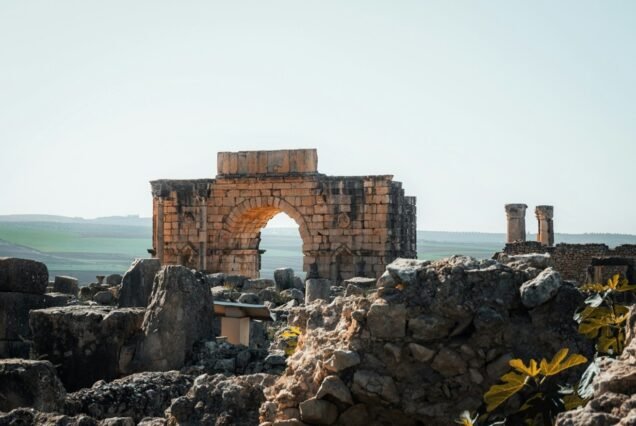
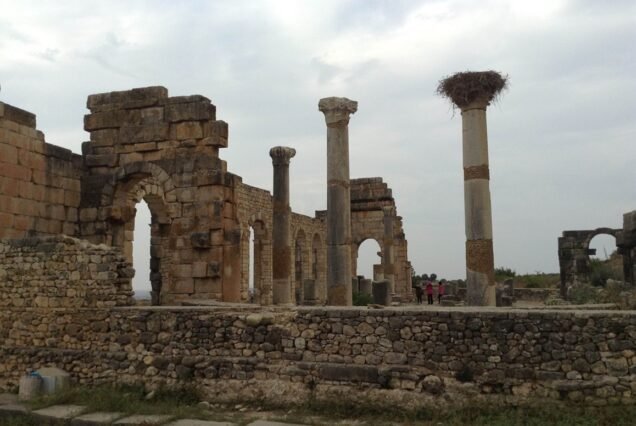
Say goodbye to Chefchaouen and head south to the UNESCO World Heritage Roman ruins of Volubilis.
Volubilis is one of Morocco’s best-preserved Roman sites, located on a fertile plain surrounded by wheat fields. It was built before the Christian era, when the territory was part of the Berber Kingdom of Mauretania. It is believed that around 20,000 people once inhabited this 42-hectare walled city, whose wealth was largely derived from olive production.
While traveling toward Fes, stop in Meknes to explore Bab Mansour Gate. Completed in 1732, the gate is notable not only for its impressive size but also for its original green and white zellij tiles, marble columns, and Quranic inscriptions along the top.
Visit the Royal Granaries, also known as Heri es-Souani, which once served as stables for up to 12,000 horses and as storage for large quantities of grain. Although the Lisbon earthquake caused the roof to collapse in the 18th century, the site remains an impressive example of Moroccan architecture.
In the afternoon, continue to the city of Fes, where you will spend the night in a charming riad in the old Medina of Fes.
Meet your guide and spend half a day learning about the history and culture of Fes. It is considered the oldest imperial city in Morocco, and its Medina is one of the largest car-free urban areas in the world. In addition, the Medina of Fes is listed as a UNESCO World Heritage Site.
The Medina of Fes consists of two historic quarters: Fes el Bali and Fes el Jdid. The Nouvelle Ville was built during the French colonial era.
Wander through Fes el Bali, which dates back to the 8th century, and visit the 11th-century Chouara Tannery, the largest and busiest medieval tannery in the world. This ancient tannery processes leather from sheep, cows, goats, and other similar animals.
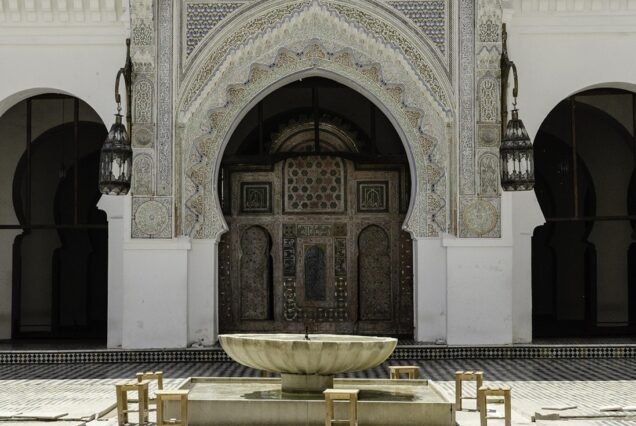
The next stop is Al Quaraouiyine University and its mosque, built in 859 AD by the Tunisian-born Fatima al-Fihri. It is not only one of the oldest institutions in the world but also the first university to be founded by a woman.
Admire the intricately crafted woodwork and tilework during a visit to the Al Attarine Madrasa. Continue to the Mellah quarter (the Jewish neighborhood) in Fes el Jdid, which dates from the 13th century.
In the afternoon, return to your riad.
Start your day early and venture into the Sahara Desert of Merzouga. Your journey begins through the Swiss-style city of Ifrane, known for its nearby cedar-covered extinct volcanic craters and alpine ski routes. Ifrane is also home to Al Akhawayn University, a private university founded in 1995 and based on the American university system.
Continue to the dense cedar forest of Azrou, which is home to the Barbary apes. Head south and drive over the Col of Tizi N’Zad Pass (2,178 meters – 7,146 feet), passing through cedar trees in the Atlas Mountain range. Upon reaching Midelt, located between the Middle Atlas and the High Atlas Mountains, the landscape is colored by apricot, walnut, and plum trees.
Climb up and over the Tizi N’Talghemt Pass (1,990 meters – 6,233 feet) and descend into the Ziz Valley, well known for its hidden oases and palm groves. Continue through Aoufous and Erfoud, where you will see many ksour, traditional fortified houses typical of southern Morocco. Drive through Erfoud, famous for its fossils and date festival, before reaching the Sahara Desert of Erg Chebbi, a vast sea of sand dunes covering approximately 13 square miles (35 square kilometers).
Upon arrival in the Sahara Desert, hop on your camel and cross the sand dunes on your way to the Berber camp. Before reaching the camp, stop along the way to admire the sunset, climb a high dune, and enjoy a breathtaking moment surrounded by endless sand as the sun sets. After sunset, arrive at the camp for dinner and traditional music around the campfire.
Get up early to catch the sunrise; there is nothing better than witnessing this magical moment. Continue to the city of Rissani, which used to serve as an important caravan trading point until a century ago.
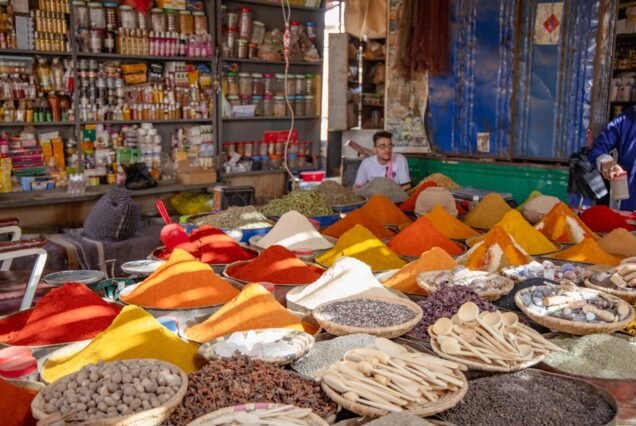
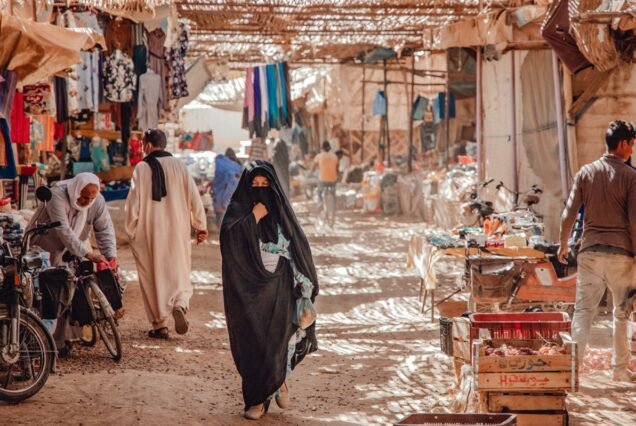
Stop in Rissani to visit the local market (if it is a market day). Locals gather three times a week to shop for all their needs—every Tuesday, Thursday, and Sunday—where people sell and buy various products including dates, fruits, and much more.
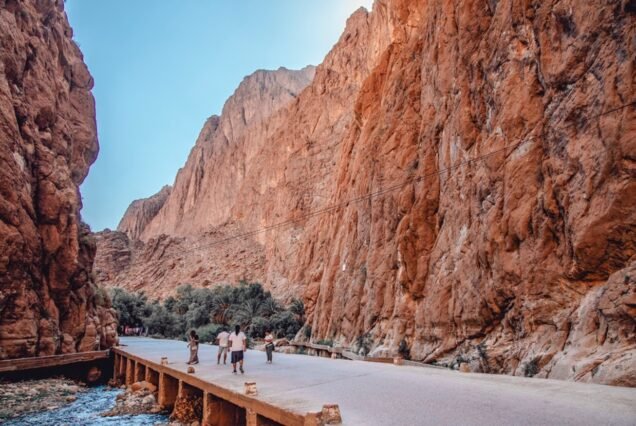
Make your way to Tinghir through local ksour and traditional villages. Leave the main road to explore the spectacular Todra Gorges, where you will have time to take beautiful photos of the Todra Valley and its palm groves, an outstanding village set just behind the river. The Todra Gorges are well known among rock-climbing enthusiasts and are located only 15 km from the city of Tinghir.
Continue back into the Atlas Mountains as you leave Tinghir, once an important center for Berber tribes, and travel onward to the Dades Valley, where you will spend the night.
Venture into Marrakech continues through the Rose Valley and the Hollywood of Morocco. It is time to leave the Dades Valley and travel through the Road of a Thousand Kasbahs, where local families still live in kasbahs.
Our trip first takes us to the Rose Valley and the immense palm grove of Skoura. Kelaat M’gouna is very well known for its annual Rose Festival, which takes place during the first few weeks of May. If you are lucky to travel through the valley during the harvest of the Damask rose, you can see farmlands and riverbanks embellished in pink, especially during the harvesting season.
Continue west to Ouarzazate, known as the Hollywood of Morocco. Time allowing, visit Atlas Studios (optional), where many Hollywood movies were filmed.
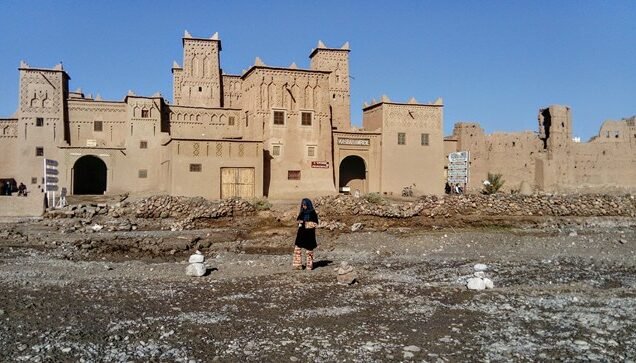
Half an hour later, we turn right to shortly arrive at the kasbah, a UNESCO World Heritage Site. It is a mud-and-straw mixture building dating back to the 11th century, from the Almoravid period. It once held an important position as a trade center for trans-Saharan caravans. Lose yourself wandering through the mud-brick alleys and passageways of this traditional village. You can climb to reach its peak, from where you can admire panoramic views of the kasbah and the surrounding area.
From there, make your way to Marrakech over the High Atlas Mountains and through the pass of Tizi N’Tichka (2260 meters – 7414 feet). Descend the Tichka Pass along the winding road across the High Atlas Mountains, where you can notice the landscape gradually changing until you reach the Red City of Marrakech.
Far from the old Medina of Fes, Marrakech has more Amazigh (Berber) than Arab historical roots. Marrakech, nicknamed the Red City, has always been a major economic center of the Berber Atlas Mountain tribes. Start your day by visiting Morocco’s top tourist attractions in Marrakech.
Marrakech’s main square, Jemaa el Fna, is a square and marketplace in the medina of Marrakech (old city). It is frequented by both locals and tourists and remains the main square of the city. In the afternoon, the square comes alive with musicians and storytellers.
Next, visit the Bahia Palace, a 19th-century structure with rooms beautifully decorated with stuccos, paintings, and mosaics, as well as a number of gardens. The Saadian Tombs are an ancient royal necropolis in Marrakech, located inside the royal kasbah on the southern side of the Kasbah Mosque.
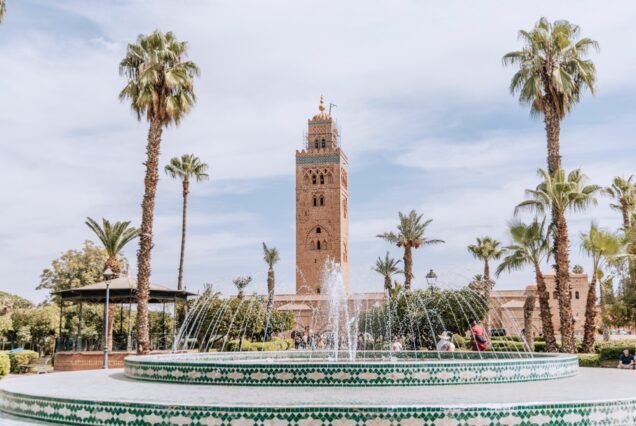
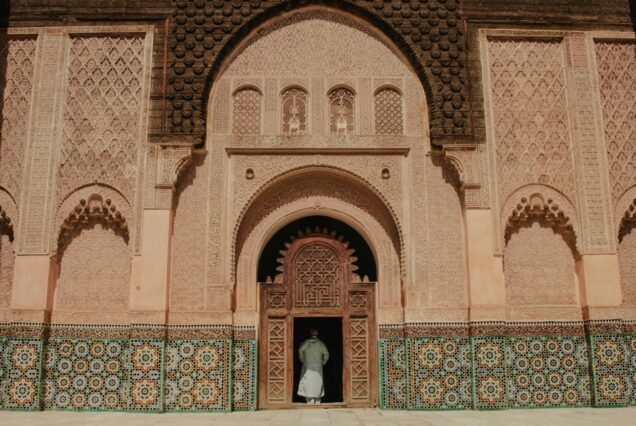
Orient yourself to the west to find the Koutoubia Mosque and its beautiful gardens. The mosque was built in the 12th century, and its minaret remains the tallest building in Marrakech, standing at 70 meters. Visit the Ben Youssef Madrasa, an Islamic school from the 16th century, to admire its beautiful tile work and carved cedar ceilings.
End your visit in the New City, where you will find the Majorelle Garden, a one-hectare artist landmark and botanical garden located in the Nouvelle Ville. Created starting in 1923, the French orientalist artist Jacques Majorelle worked on it for nearly four decades, and it includes a villa designed by the French artist.
Depending on your flight details, transfer from your hotel to Marrakech Airport.
Included/Excluded
- Transportation according to the planned itinerary.
- Private 4×4 jeep with air conditioning (mini-bus with air conditioning for groups larger than six).
- English-speaking driver/guide.
- Fuel and all transportation-related expenses.
- 7 nights in a hotel or riad on a BB (breakfast ), in rooms with private bathrooms.
- 1 night in a desert tented camp, including Breakfast & dinner and accommodation.
- One night in a Dades Valley Hotel , on a half-board basis (breakfast and dinner )
- Guided tours of the Medinas of Marrakech and Fes with a certified English-speaking local guide.
- Camel (dromedary) excursion in the desert.
- Exclusive, private services (no other guests will be added to the group).
- International and domestic flights.
- Lunches.
- Dinner.
- Beverages.
- Entrance fees to monuments and attractions.
- Tips and personal expenses.
- Any services not explicitly listed under "Included in the Price".
Tour Map
You May Like
The Ultimate Morocco: 8 Days Tour from Casablanca to Marrakech via Sahara & Blue City